
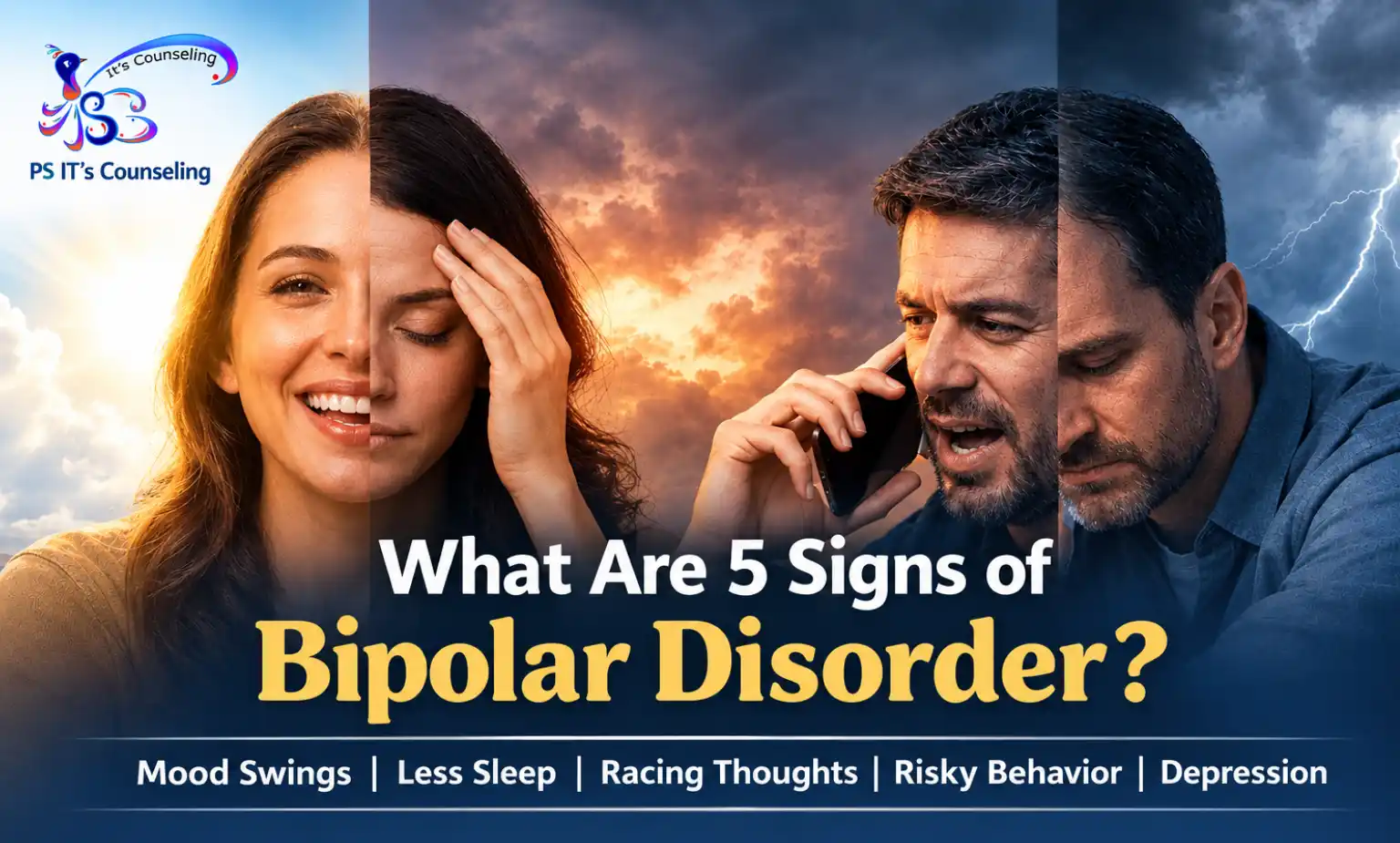
The five most common signs of bipolar disorder are extreme mood elevation or irritability, decreased need for sleep without feeling tired, racing thoughts with rapid speech, impulsive or risky behavior, and deep depressive episodes that last for days or weeks.
These signs reflect shifts in how your brain regulates mood, energy, thinking, and behavior. They do not appear as brief emotional reactions. They occur in episodes that are intense, persistent, and disruptive.
Bipolar disorder is a brain-based mood condition marked by recurring episodes of mania or hypomania and depression. During these episodes, the brain’s systems that regulate emotion, motivation, sleep, and impulse control become unstable. This instability drives patterns that feel unlike your usual self.
The signs below matter because they describe changes that affect how you function, not just how you feel.
Manic and hypomanic episodes often involve a sustained elevated or irritable mood. You may feel unusually happy, powerful, or unstoppable. Others feel intensely agitated or short-tempered rather than euphoric.
These states last for several days or longer. They go far beyond a good mood. You may feel driven, overconfident, and mentally “switched on.” Some people experience mixed states, where high energy exists alongside sadness, anger, or anxiety.
A key feature of bipolar disorder is functioning on very little sleep without feeling exhausted. You may sleep three or four hours and still feel energetic the next day.
This differs from insomnia, where you want sleep but feel drained. In bipolar mania or hypomania, you simply do not feel the need for rest. During depressive episodes, the pattern often reverses and you may sleep excessively yet still feel fatigued.
Your thoughts may move so quickly that you struggle to keep up with them. You might talk fast, jump between topics, or feel unable to slow your mind.
This symptom reflects increased brain activation. Concentration becomes difficult. You may start many ideas but struggle to organize them into completed actions.
During elevated moods, judgment often weakens. You may spend large amounts of money, take sexual risks, use substances, or make sudden life decisions that carry serious consequences.
The behavior feels logical in the moment because confidence is inflated. Later, you may look back and feel confused or distressed by what you did.
Depressive episodes involve persistent sadness, emptiness, or numbness. You may lose interest in activities you usually enjoy. Energy drops. Thinking slows. Feelings of worthlessness or excessive guilt may appear.
These episodes last days to weeks and interfere with daily life. Some people also experience thoughts of death or suicide, which require immediate professional care.
Everyone experiences emotional ups and downs. Bipolar episodes differ in three clear ways.
They last much longer than ordinary mood changes. They reach a level of intensity that feels extreme. They interfere with work, relationships, or safety.
If your mood changes repeatedly disrupt your ability to function, they are not simply personality traits or stress reactions.
Depression alone causes persistent low mood without periods of elevated energy.
Anxiety disorders involve excessive worry and physical tension but do not produce true manic or hypomanic episodes.
ADHD can include impulsivity and distractibility, but it does not cause distinct episodes of euphoria, decreased need for sleep, and mood cycling.
These conditions can overlap. That is why professional evaluation matters.
Bipolar I disorder includes full manic episodes that may require hospitalization.
Bipolar II disorder involves hypomanic episodes and major depressive episodes but no full mania.
Cyclothymic disorder features chronic, milder mood swings that persist for years.
The core signs remain similar, but intensity and duration vary.
You should seek professional evaluation if mood changes last several days or longer, interfere with daily life, include risky behavior, or involve thoughts of self-harm.
Early diagnosis improves long-term stability.
Clinicians diagnose bipolar disorder through detailed clinical interviews, symptom history, and pattern recognition over time. They rule out medical causes and substance effects.
No blood test confirms bipolar disorder. Accurate diagnosis depends on careful assessment.
Most treatment plans include mood-stabilizing medication. Many also include psychotherapy, sleep regulation, structured routines, and ongoing monitoring.
Treatment focuses on reducing episode frequency, shortening episode length, and improving daily functioning.
With proper treatment, many people achieve long periods of stability. They work, maintain relationships, and pursue goals.
Management is long term. Consistency matters more than perfection.
Bipolar disorder commonly shows up as elevated or irritable moods, decreased need for sleep, racing thoughts, impulsive behavior, and deep depressive episodes. These signs reflect brain-based changes that require professional care. If you recognize these patterns in yourself or someone you love, seeking evaluation is the next important step. At PS IT’s Counseling, experienced mental health professionals provide thorough assessment and evidence-based treatment to help you move toward stability and long-term well-being.
Early signs of bipolar disorder may include noticeable changes in mood, energy, sleep, activity, and behavior. A person might experience unusually high energy, reduced need for sleep, racing thoughts, impulsive decisions, or periods of persistent sadness. One symptom alone does not confirm bipolar disorder. A mental health professional should evaluate the overall pattern.
Five common signs associated with bipolar disorder include extreme mood changes, unusual energy levels, changes in sleep, impulsive behavior, and difficulty concentrating. Symptoms may occur during manic, hypomanic, or depressive episodes. Their severity and duration vary, so professional assessment is necessary for an accurate diagnosis.
Yes. People with bipolar II disorder experience hypomanic episodes and major depressive episodes without a history of full manic episodes. Hypomania may be less disruptive than mania and can sometimes go unnoticed. A detailed history of mood changes can help a professional identify the condition.
Yes. Bipolar disorder can develop at different ages, although symptoms often begin during adolescence or early adulthood. When significant mood symptoms first appear later in life, healthcare professionals should also assess medical conditions, medications, and other possible causes.
No. Some mood changes may not be immediately noticeable to other people. Hypomanic symptoms, in particular, can be difficult to identify, and some individuals may not recognize their behavior as unusual. However, not every mood swing indicates bipolar disorder. Diagnosis requires an assessment of symptoms over time.
A manic episode may involve unusually high or irritable mood, increased energy, racing thoughts, rapid speech, reduced need for sleep, and impulsive or risky behavior. Mania can significantly affect daily functioning and may involve psychosis in severe cases. Professional evaluation is important when these symptoms occur.
A mental health professional evaluates the person’s mood history, symptom duration, severity, behavior, family history, and effects on daily life. The assessment may also consider medications, substance use, and medical conditions that can cause similar symptoms. There is no single blood test that confirms bipolar disorder.
Bipolar disorder is generally considered a long-term condition that requires ongoing management. Symptoms may change over time, and treatment can help many people manage mood episodes and improve daily functioning. A personalized care plan may include medication, psychotherapy, and regular monitoring.
Yes. Bipolar disorder can be managed through individualized treatment. Care may include medication, psychotherapy, education about mood episodes, and support for healthy routines. Treatment needs differ from person to person, and medication changes should be discussed with a qualified healthcare professional.
Yes. Therapy can help people recognize mood changes, develop coping strategies, manage stress, strengthen relationships, and support treatment adherence. Psychotherapy is generally used alongside appropriate medical care rather than as a replacement for prescribed medication.
Also Read: