
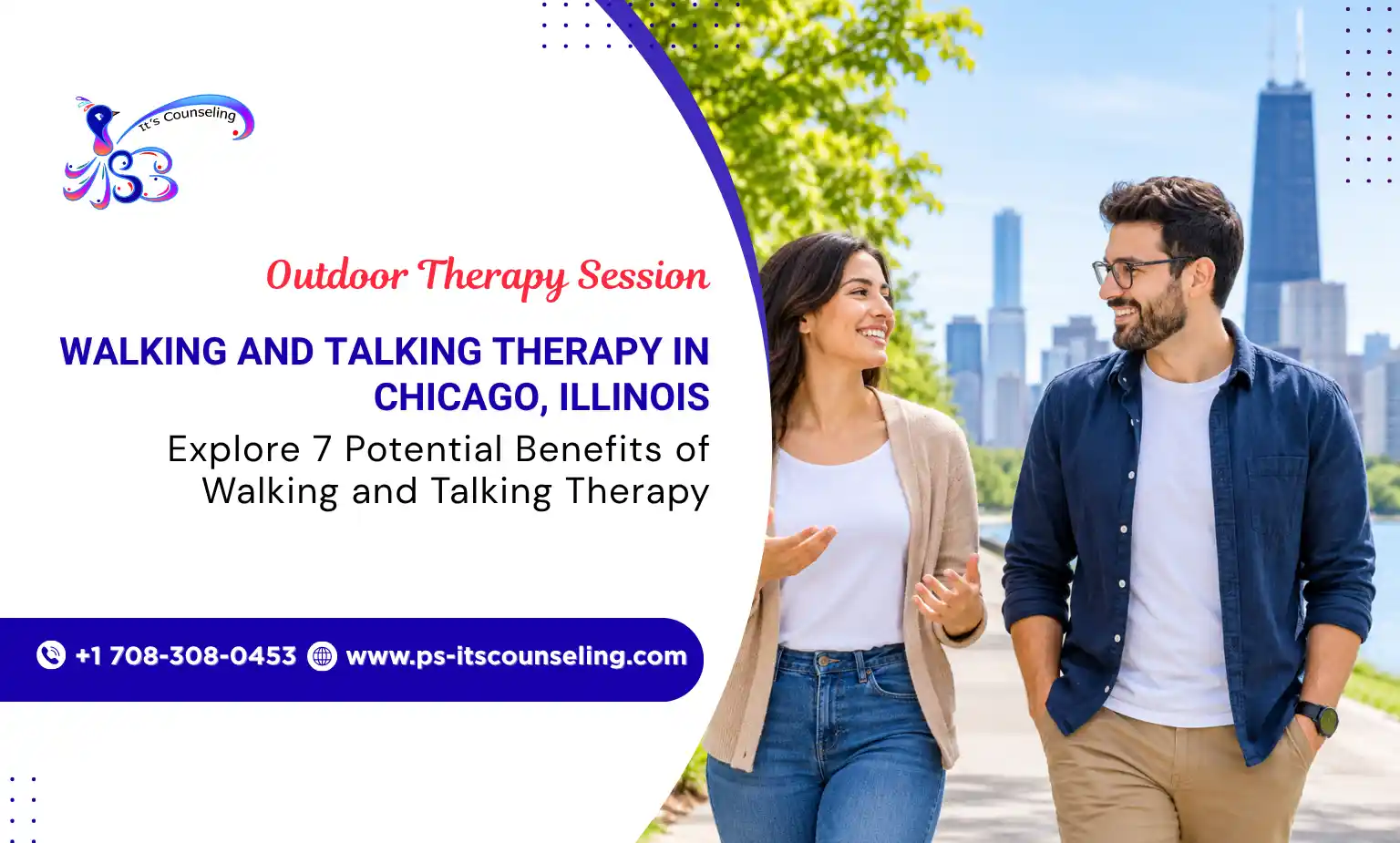
Walking and talking therapy is a form of counseling that alternates gentle movement outdoors with professional mental health care and conversation in the city of Chicago, Illinois. Rather than being in a traditional therapy office, clients walk with their qualified therapist to discuss emotional issues, personal problems, and treatment objectives. This can be a helpful strategy for some individuals to feel more comfortable in communication, processing challenging experiences, and coping with daily stresses.
Also known as walk-and-talk therapy or outdoor counseling, this approach uses the same therapeutic principles as traditional psychotherapy while changing the environment in which sessions take place.
Walking and Talking Therapy is a type of psychotherapy where the therapist and client walk together and talk. Sessions may take place in parks, walking trails, gardens, or other suitable outdoor spaces.
The therapist uses professional counseling techniques to help clients understand their emotions, recognize unhelpful thought patterns, and develop healthier coping strategies.
Walking therapy is not an ordinary walk with a friend because it is a therapeutic process. The therapist: Sets treatment goals, tracks progress, employs appropriate, evidence-based techniques as needed.
Walk-and-talk sessions follow a process similar to traditional individual therapy. The main difference is the outdoor setting.
A typical session may include:
Walking does not replace the therapeutic process. The therapist continues to provide structured professional support throughout the session.
Walking and talking therapy may offer several benefits for people who feel more comfortable discussing personal concerns in an outdoor environment.
Gentle physical activity and time outdoors may help some people manage everyday stress. Walking can provide a change of environment and an opportunity to step away from daily responsibilities.
Research on nature-based activities has identified potential benefits for certain mental health outcomes, although results vary between individuals and studies.
Some people find face-to-face conversations uncomfortable, especially when discussing sensitive experiences.
Walking side by side may feel less formal than sitting directly across from a therapist. This environment can make conversations feel more natural for some clients.
Walking can provide time and space to reflect on personal experiences. During sessions, therapists can help clients identify emotional triggers, understand behavioral patterns, and recognize how certain situations affect their responses.
Walking introduces gentle movement into the therapy environment. Research suggests that physical activity can support mental health, although walking during therapy should not be considered a replacement for clinical treatment.
A traditional office setting does not feel comfortable for everyone. Outdoor counseling offers another environment for people who prefer natural surroundings or feel more relaxed outside.
Therapists may incorporate mindfulness exercises that help clients focus on their surroundings, breathing, and present experiences.
For example, a therapist might guide a client through a grounding exercise when discussing stressful situations or overwhelming thoughts.
People experiencing relationship difficulties, career changes, grief, or personal transitions may appreciate having a different environment for therapeutic conversations.
The therapist can help them understand their feelings, evaluate their choices, and develop practical ways to manage challenges.
Walking and talking therapy may suit adults who prefer movement and outdoor environments during counseling sessions.
It may be worth discussing with a therapist if you:
However, this approach does not suit every person or every clinical situation. A therapist should assess individual needs before recommending outdoor sessions.
Both approaches provide professional mental health support, but they differ in their physical environment and practical considerations.
| Factor | Walk and Talk Therapy | Traditional Talk Therapy |
| Setting | Parks, trails, or outdoor spaces | Private therapy office |
| Position | Walking side by side | Usually seated |
| Movement | Includes gentle walking | Usually involves sitting |
| Privacy | Public surroundings require additional consideration | Private indoor setting |
| Weather | Outdoor conditions affect sessions | Less affected by weather |
| Therapeutic approach | Can include evidence-based techniques | Can include evidence-based techniques |
Neither format is automatically more effective. The right option depends on personal preferences, clinical needs, accessibility, and the therapist’s recommendations.
Chicago offers various parks, trails, and outdoor environments that people may consider when discussing walk-and-talk therapy with a local provider.
Before beginning sessions, discuss the following considerations with your therapist.
Outdoor therapy introduces privacy considerations because other people may walk nearby or overhear parts of a conversation.
Your therapist should explain these limitations, obtain informed consent, and discuss ways to reduce unnecessary exposure of personal information.
A suitable walking route should also consider pedestrian safety, lighting, accessibility, and available places to rest.
Chicago experiences cold winters, hot summers, rain, and changing weather conditions. These factors can affect outdoor sessions.
Discuss alternative arrangements, such as virtual or indoor appointments, when weather makes walking uncomfortable or unsafe.
Clients should also discuss mobility limitations, physical comfort, and any accessibility requirements before selecting a location.
Walking and talking therapy can be a useful option for people who prefer a less formal environment for professional counseling. But, the place is not the only factor that determines the effectiveness of treatment.
Your symptoms, treatment objectives, medical requirements, mobility and preferences need to be considered by a qualified therapist before recommending this approach.
In some cases a more private indoor setting may be necessary, such as when a client requires intensive emotional support, a crisis assessment or a setting that has less distraction.
CBT (Cognitive Behavioral Therapy), ACT (Acceptance and Commitment Therapy), and mindfulness-based interventions can also be integrated into outdoor sessions when clinically appropriate.
The best treatment format is the one that supports your individual needs while maintaining professional standards and continuity of care.
Walking and talking therapy is a form of psychotherapy where clients meet their therapist outdoors and discuss emotional concerns while walking together. It combines professional counseling with gentle movement.
Walking and talking therapy may help some people feel more comfortable discussing anxiety. However, its effectiveness depends on individual needs and the therapeutic techniques used. It should not replace an appropriate clinical treatment plan.
Sessions may take place in suitable parks, walking trails, and other outdoor spaces. The therapist and client should select a location based on accessibility, safety, privacy, and availability.
Therapists must follow applicable confidentiality requirements. However, outdoor sessions create a risk that other people may overhear conversations. Therapists should explain these limitations before sessions begin.
Neither approach is universally better. Walking therapy offers movement and an outdoor environment, while traditional therapy provides a more controlled and private setting. The appropriate choice depends on individual preferences and clinical needs.
Therapists may arrange an indoor appointment, virtual session, or rescheduled visit when outdoor conditions become uncomfortable or unsafe. Discuss these arrangements before beginning treatment.
Some research suggests that nature-based walking may support certain emotional outcomes in people experiencing depression. However, walking therapy alone is not an established treatment for depression and should not replace appropriate professional care.
Choosing a therapy format should depend on your comfort, treatment goals, and clinical needs. Walking and talking therapy offers an alternative environment for people who prefer movement and outdoor conversations, while traditional counseling remains an effective option for many mental health concerns.
At P.S. It’s Counseling, professional mental health support focuses on helping individuals understand emotional challenges, develop healthier coping strategies