
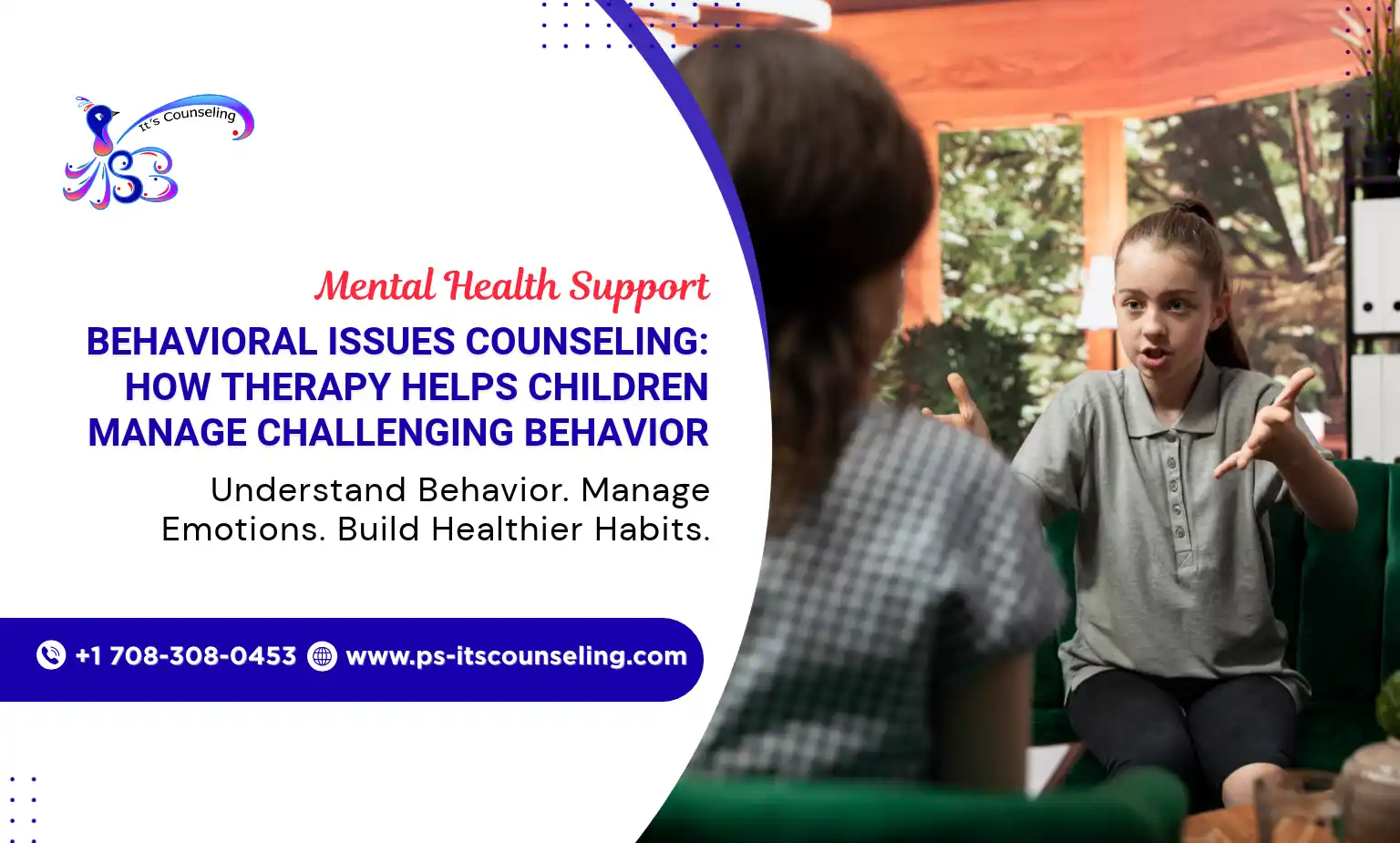
Behavioral issues counseling helps children and teenagers understand difficult emotions, manage challenging reactions, and develop healthier ways to communicate. When a child frequently experiences anger, emotional outbursts, defiance, aggression, or difficulty following instructions, therapy can help identify the underlying factors and build practical coping skills.
Challenging behavior does not automatically indicate a behavioral disorder. Stress, anxiety, family changes, developmental differences, and difficulties at school can all influence how children respond to everyday situations. Behavioral challenges therapy focuses on understanding these patterns rather than simply punishing unwanted behavior.
What Is Behavioral Issues Counseling?
Behavioral issues counseling is a form of mental health support that helps children and teenagers understand their emotions, recognize behavioral triggers, and practice healthier responses.
A therapist considers the child’s age, developmental needs, family environment, relationships, and daily experiences before recommending an approach. Depending on the concerns, counseling may involve the child, parents, or the entire family.
The goal is to improve emotional regulation, communication, problem-solving, and relationships at home and school.
7 Common Signs Your Child May Need Behavioral Challenges Therapy
Every child experiences difficult emotions occasionally. However, persistent behavioral changes that interfere with daily activities deserve attention.
Parents may notice these signs:
- Frequent anger and emotional outbursts: The child becomes overwhelmed by frustration or reacts intensely to everyday situations.
- Defiant behavior: The child regularly argues, refuses instructions, or struggles with reasonable boundaries.
- Aggressive reactions: The child frequently hits, pushes, threatens, or displays other harmful behaviors.
- Difficulty managing frustration: Small disappointments lead to prolonged emotional reactions.
- Social withdrawal: The child avoids friendships, family activities, or social interactions.
- School-related difficulties: Teachers report disruptive behavior, difficulty following classroom expectations, or repeated conflicts.
- Changes in everyday routines: The child struggles with transitions, responsibilities, sleep routines, or activities that previously felt manageable.
These signs do not establish a diagnosis. Their frequency, intensity, duration, and impact on the child’s functioning help determine whether professional assessment may be appropriate.
What Causes Behavioral Challenges in Children and Teens?
Behavioral difficulties can develop through several interacting emotional, developmental, and environmental factors.
Anxiety and Emotional Stress
Children may express anxiety through irritability, avoidance, restlessness, or emotional outbursts. A child who worries about school or friendships may struggle to explain those feelings and instead respond through challenging behavior.
Family Conflict and Major Life Changes
Parental separation, grief, moving, household conflict, or changes in family routines can affect a child’s emotional security. Some children respond by becoming withdrawn, argumentative, or unusually sensitive to changes.
ADHD and Developmental Differences
Attention difficulties, impulsivity, communication differences, and developmental needs can influence how children manage instructions, relationships, and everyday expectations. A qualified professional can help determine whether further assessment is necessary.
Trauma and Difficult Experiences
Bullying, loss, frightening experiences, or other stressful events may affect emotional regulation and behavior. Some children become irritable or aggressive, while others avoid social situations or withdraw.
Understanding these possible influences helps parents and therapists identify support that addresses the child’s actual needs.
How Does Behavioral Therapy Help Children?
Behavioral challenges therapy focuses on building skills that children can use in real-life situations. Treatment goals depend on the child’s age, concerns, and individual assessment.
Understanding Emotional Triggers
Therapists help children recognize situations, thoughts, and feelings that contribute to difficult reactions. For example, a child may learn to identify frustration before it develops into an argument or emotional outburst.
Developing Emotional Regulation Skills
Children can practice identifying emotions, taking appropriate breaks, using calming strategies, and responding to disappointment. These skills help them manage difficult situations more constructively.
Improving Communication and Problem-Solving
Therapy can help children express their needs, listen to others, resolve disagreements, and consider different responses before acting.
Building Positive Behavioral Patterns
Therapists may work with parents to establish consistent expectations, encourage positive behavior, and reinforce new skills at home. Progress often requires regular practice outside therapy sessions.
Which Therapy Approaches Help With Behavioral Issues?
The most appropriate approach depends on the child’s needs and the concerns identified during assessment.
Cognitive Behavioral Therapy (CBT): CBT helps children understand connections between thoughts, feelings, and behaviors. Therapists may use age-appropriate exercises to help children recognize unhelpful thinking patterns and practice healthier responses.
Behavior Therapy and Parent Training: Behavior therapy focuses on strengthening helpful behaviors and reducing behaviors that interfere with daily functioning. Parent training helps caregivers use consistent communication, positive reinforcement, and effective behavior-management strategies.
Family Therapy: Family therapy can improve communication, address recurring conflicts, and help family members understand how their interactions influence the child’s experiences.
Play-Based Approaches: For younger children, age-appropriate play activities may help them communicate feelings and experiences that they find difficult to explain verbally. Play-based work should be selected according to the child’s needs and the therapist’s training.
Research supports behavioral and cognitive-behavioral approaches for several childhood concerns. Parent involvement can also be valuable, particularly when behavioral difficulties occur across home and school environments.
How Can Parents Support Children With Behavioral Difficulties?
Parents can support emotional and behavioral development through consistent, practical actions.
- Listen calmly: Give children time to explain their feelings without immediately criticizing their reactions.
- Set clear expectations: Use simple instructions and consistent boundaries.
- Recognize positive efforts: Acknowledge when children communicate calmly or manage frustration.
- Maintain routines: Predictable schedules can reduce uncertainty and everyday stress.
- Understand triggers: Notice whether certain situations, transitions, or expectations lead to difficult reactions.
- Communicate with teachers: Discuss patterns observed at school to understand whether concerns occur in multiple settings.
These strategies can complement professional support but do not replace an individualized assessment when concerns persist.
When Should You Seek Behavioral Issues Counseling in Illinois?
Consider professional support when behavioral difficulties regularly affect your child’s emotional health, family relationships, school participation, or social development.
An evaluation may help identify contributing factors and determine whether counseling, parent guidance, family involvement, or additional assessment would be appropriate.
Parents seeking behavioral issues counseling in Joliet and surrounding Illinois communities can explore professional support based on their child’s needs. If behavior creates an immediate risk of harm to the child or another person, seek urgent professional assistance.
Concerned About Your Child’s Behavior? Contact P.S. It’s Counseling to Discuss Your Concerns and Explore Appropriate Support.
Build Healthier Behavioral Patterns With P.S. It’s Counseling
Children need understanding, guidance, and opportunities to develop healthy ways of expressing emotions. With appropriate therapeutic support and consistent encouragement at home, families can work toward improved communication, emotional regulation, and stronger relationships.
P.S. It’s Counseling provides a supportive environment where children, teenagers, and families can address emotional and behavioral concerns through individualized counseling. The therapeutic approach considers each client’s experiences, needs, and goals.
Frequently Asked Questions
1. What is behavioral issues counseling for children?
Behavioral issues counseling helps children understand their emotions, identify behavioral triggers, and develop healthier ways to respond to difficult situations. Therapy may focus on emotional regulation, communication, problem-solving, and positive behavior development.
2. What causes behavioral problems in children?
Behavioral problems can develop due to anxiety, emotional stress, family conflicts, developmental differences, school pressure, trauma, or difficulty managing emotions. Understanding the underlying causes helps therapists recommend appropriate support.
3. Can therapy help a child with behavioral problems?
Yes. Therapy can help children recognize emotional triggers, manage frustration, improve communication, and develop healthier coping strategies. Treatment depends on the child’s age, developmental needs, and individual concerns.
4. What type of therapy is best for behavioral issues in children?
Cognitive Behavioral Therapy (CBT), behavior therapy, parent training, and family therapy may help address childhood behavioral difficulties. A qualified mental health professional can recommend an approach based on the child’s needs.
5. How do I know if my child needs behavioral counseling?
Consider counseling if your child frequently experiences emotional outbursts, aggressive reactions, difficulty following instructions, social conflicts, or behavioral changes that interfere with school, family relationships, or daily activities.
6. How long does behavioral challenges therapy take?
The duration of behavioral therapy varies depending on the child’s concerns, treatment goals, age, and response to therapy. Some children make progress within a few sessions, while others benefit from longer-term support and consistent practice at home.
7. Can parents participate in child behavioral therapy?
Yes. Parent involvement can be an important part of behavioral therapy. Therapists may guide parents in setting consistent boundaries, encouraging positive behaviors, improving communication, and reinforcing coping skills at home.
8. Can anxiety cause behavioral problems in children?
Yes. Children experiencing anxiety may show irritability, avoidance, restlessness, emotional outbursts, or difficulty following instructions. Behavioral changes may sometimes reflect emotional distress that children cannot easily communicate.
9. Does family therapy help with children’s behavioral issues?
Family therapy can help improve communication, address recurring conflicts, and strengthen relationships between children and family members. It may be beneficial when family interactions contribute to ongoing behavioral difficulties.
10. When should parents seek behavioral issues counseling in Illinois?
Parents in Illinois should consider professional counseling when behavioral difficulties regularly affect their child’s emotional well-being, school performance, social relationships, or family life. A qualified therapist can help assess concerns and recommend appropriate support.