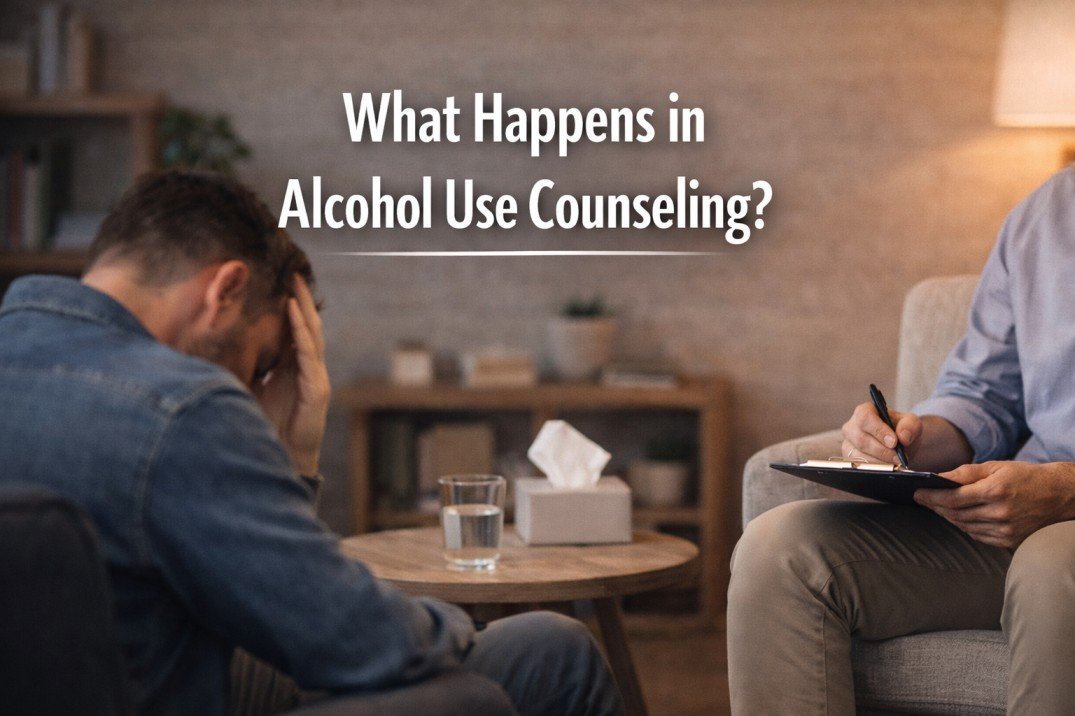
Alcohol use counseling involves meeting with a trained mental health professional to understand your drinking patterns, identify what drives them, and build practical skills to reduce or stop alcohol use safely and sustainably. You talk openly about your goals, triggers, emotions, and habits. Together, you create a structured plan that helps you change behavior and maintain progress over time.
The purpose of alcohol use counseling is to change drinking behavior by addressing the psychological and behavioral factors behind it. Alcohol problems rarely exist on their own. Many people drink to cope with stress, anxiety, trauma, sleep problems, or relationship strain. Others develop automatic habits where alcohol becomes linked to specific times, places, or emotions.
Counseling helps you understand these connections clearly. You examine what alcohol does for you in the short term and what it costs you in the long term. This awareness creates a foundation for change. The goal is not just stopping alcohol. The goal is building healthier coping systems so you no longer depend on drinking to manage life.
Also Read: Best Frequency for Brain Healing
Before your first full session, you usually complete an intake assessment. This includes questions about your drinking frequency, quantity, past attempts to cut back, physical health, mental health history, and any withdrawal symptoms. This step matters because treatment planning depends on accurate information.
You also discuss your goals. Some people want complete abstinence. Others want to reduce drinking. A skilled counselor respects your starting point while also addressing safety. Confidentiality is explained clearly. What you share remains private except in specific safety situations.
Also Read: Sound Therapy for PTSD
The first session focuses on understanding your story. You describe how your drinking developed and what concerns you now. Your counselor asks about patterns. When do you drink. What do you feel before you drink. What happens after.
You also explore mental health factors. Depression, anxiety, trauma, and chronic stress frequently interact with alcohol use. Addressing these conditions improves outcomes. By the end of the session, you and your counselor outline a treatment plan that includes session frequency and focus areas.
Ongoing counseling is structured and active. You learn how cravings work in the brain. Repeated alcohol use strengthens reward pathways and weakens impulse control circuits. Understanding this reduces shame and increases strategy.
You practice coping skills that interrupt automatic drinking. These may include urge surfing, structured distraction, breathing techniques, and delay strategies. You identify triggers such as stress, conflict, boredom, or social pressure and develop specific responses for each one.
You also work on thought patterns. Many people carry beliefs such as I cannot relax without alcohol or I already messed up so it does not matter. Counseling challenges these distortions and replaces them with accurate thinking that supports change.
Lifestyle structure becomes part of the work. Sleep, nutrition, and daily routine directly affect craving intensity. Improving these areas stabilizes mood and reduces relapse risk.
A slip does not end treatment. It becomes data. You and your counselor analyze what led to it. Did stress increase. Did you skip coping steps. Were you in a high risk setting. This review strengthens your prevention plan. Recovery often involves learning through setbacks rather than avoiding them entirely.
Yes. Some people benefit from medications that reduce cravings or make drinking less reinforcing. These medications are prescribed by medical providers and are not addictive. Counseling combined with medication often improves results, especially in moderate to severe cases.
There is no fixed timeline. Some people attend counseling for several months. Others continue longer for relapse prevention and emotional support. Duration depends on severity, co occurring mental health conditions, stress levels, and personal goals. Treatment continues as long as it provides meaningful benefit.
You should consider counseling if you drink more than intended, struggle to cut back, think about alcohol frequently, use alcohol to manage emotions, or notice negative effects on relationships, work, or health. You do not need a formal diagnosis to seek help.
Alcohol use counseling provides structured, evidence based support to help you change a pattern that feels difficult to control alone. It addresses both behavior and the underlying reasons behind it. With consistent work and skilled guidance, meaningful and lasting change is realistic. At PS IT’s Counseling, you receive compassionate, professional care focused on helping you regain control of your relationship with alcohol. If you are questioning your drinking, counseling offers a clear path forward.