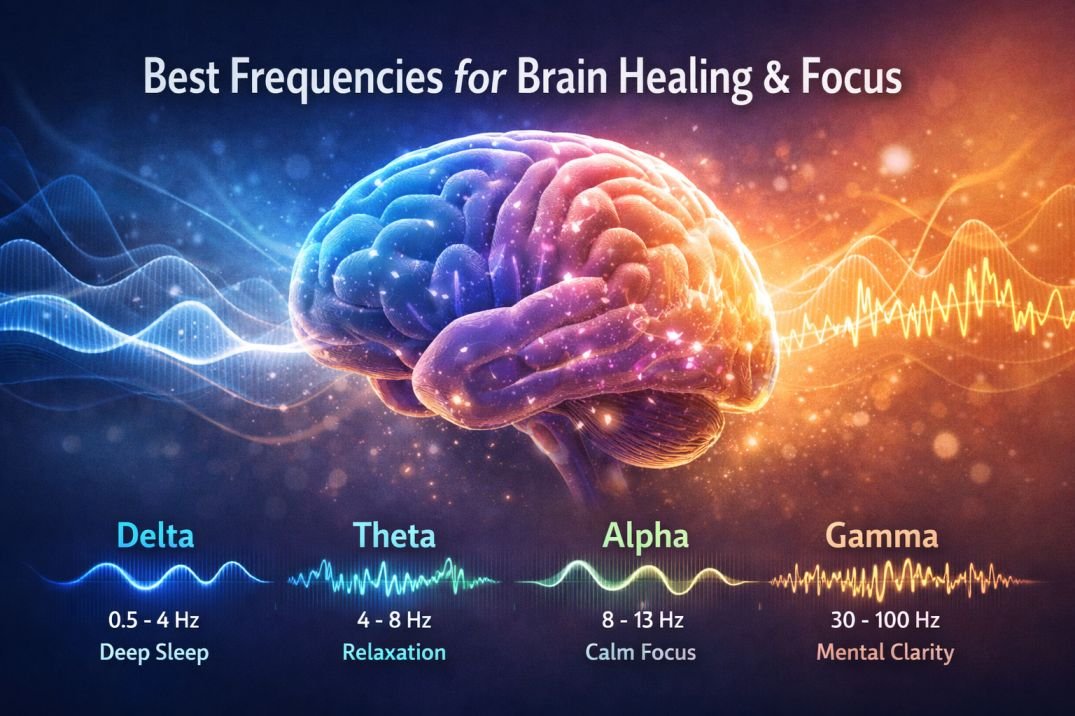
There is no single frequency that heals the brain. What specific sound frequencies do is help shift your brain into states that support rest, stress reduction, emotional processing, sleep, and cognitive function. Those states allow your brain and nervous system to recover and regulate themselves more effectively. The most useful frequencies for that purpose are Delta, Theta, Alpha, and in some cases Gamma. Other popular frequencies like 528 Hz or 432 Hz influence mood and perception but do not map directly to brainwave activity.
What matters is not the number itself, but the brain state it encourages.
Below is the full, clear breakdown.
Also Read: Best Healing Frequencies A Complete Guide
Your brain runs on electrical activity. Neurons communicate through rhythmic electrical patterns called brainwaves. Each range links to a specific mental and physiological state. Sound can influence these rhythms through a process called neural entrainment. When you listen to rhythmic audio, especially binaural beats or steady tones, your brain tends to follow that rhythm.
This does not repair damaged tissue. It changes your mental state. That change affects sleep, stress hormones, emotional regulation, and attention. Those factors influence how well your brain recovers and functions.
Also Read: What Is the Best Therapy for Domestic Violence Victims?
Brain state: Deep, dreamless sleep and physical restoration.
Your brain enters Delta during the deepest stages of sleep. In this state, your body releases growth hormone, clears metabolic waste from the brain, and restores neural energy.
Use Delta when:
How to use it:
Delta supports recovery indirectly by improving sleep quality. Sleep remains the strongest known factor in brain repair and cognitive health.
Brain state: Deep relaxation, subconscious processing, emotional regulation.
Theta appears during meditation, light sleep, and inward focused states. It allows your brain to process emotional material, reduce stress response, and access deeper memory and creativity.
Use Theta when:
How to use it:
Theta does not heal trauma by itself. It creates the mental environment that allows emotional processing to occur more easily.
Brain state: Calm alertness and relaxed focus.
Alpha acts as a bridge between rest and activity. It lowers stress while keeping you mentally clear. People with stable Alpha patterns tend to show better emotional regulation and attention control.
Use Alpha when:
How to use it:
Alpha improves brain function by reducing cortisol and mental noise. That allows clearer thinking and better emotional balance.
Brain state: High level cognitive processing, memory formation, learning.
Gamma activity increases when you concentrate deeply, learn new material, or integrate complex information. Research links 40 Hz Gamma to memory function and neural coordination.
Use Gamma when:
How to use it:
Gamma does not support relaxation or emotional recovery. It supports performance.
These frequencies do not correspond to brainwaves. They influence mood, perception, and emotional experience through music, expectation, and rhythm.
Often linked to emotional uplift and clarity. People report improved mood and relaxation. No evidence shows it alters brainwaves or repairs cells.
Many people find music tuned to 432 Hz more calming than standard tuning. It may feel more pleasant. It does not entrain brainwaves.
These appear mainly in spiritual or symbolic frameworks. They can support meditation and emotional focus through association and intention.
These frequencies can feel helpful. They do not directly affect neural rhythms in the way Delta, Theta, Alpha, and Gamma do.
Many people search for the best frequency for brain healing, but there isn’t one universal frequency that works for everyone. The ideal choice depends on your goal, whether you’re trying to relax, improve focus, support emotional healing, or calm an overactive nervous system. Different sound frequencies are commonly associated with different mental states, although current scientific evidence supporting specific healing frequencies remains limited.
For example, some listeners prefer 528 Hz frequency for emotional well-being, while others choose 432 Hz frequency for relaxation. If your goal is stress reduction, calming music combined with mindfulness practices may be more beneficial than focusing on a specific hertz value alone. Those interested in meditation often explore brain healing frequency music or meditation frequency recordings designed to promote relaxation.
Use this logic.
| Goal | Commonly Used Frequency |
| Relaxation | 432 Hz |
| Emotional Balance | 528 Hz |
| Meditation | 432 Hz or Theta-based audio |
| Focus | Alpha Brainwave Music |
| Better Sleep | Delta Brainwave Audio |
| Stress Relief | Calming frequency music |
Your need determines the frequency. There is no universal best option.
If you have epilepsy, neurological conditions, or severe mental health symptoms, talk to a healthcare professional before using brainwave entrainment.
There is no best frequency for brain healing. There are only frequencies that support specific brain states. Delta supports deep sleep and physical restoration. Theta supports emotional processing and stress reduction. Alpha supports calm focus and regulation. Gamma supports learning and cognition. Use the one that matches your actual need.
Your brain heals best through sleep, stress regulation, meaningful mental engagement, and professional care when needed. Frequencies can support that process. They do not replace it.
There is no scientifically proven frequency that directly heals the brain. However, calming music, meditation, and sound therapy may help reduce stress and improve relaxation, which can support overall mental well-being.
Many people listen to 432 Hz or 528 Hz when looking for the best frequency for brain healing, but research has not confirmed that one specific frequency repairs brain tissue or treats neurological conditions.
Current scientific evidence does not show that listening to a particular frequency can repair brain cells. Brain recovery depends on medical care, rehabilitation, sleep, nutrition, and appropriate mental health treatment.
No. They do not repair tissue. They support conditions that help the brain function better.
10 to 30 minutes works for most people.
Yes, if you tolerate them well.
Some do. Many do not match the labeled frequency accurately. Quality varies.
No. Use it alongside proper care, not instead of it.