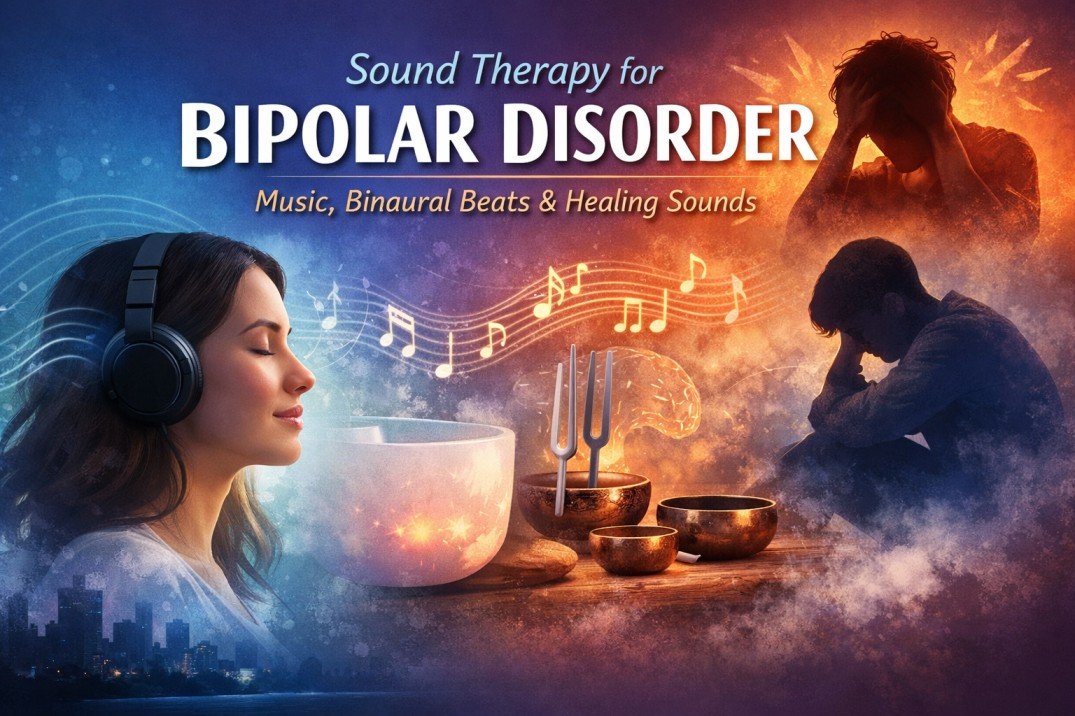
Sound therapy for bipolar disorder uses music, calming sounds, or specific frequencies to support relaxation, mood balance, and better sleep. It is a complementary practice. It does not treat bipolar disorder and cannot replace medication or psychotherapy.
Many people use sound therapy alongside professional treatment. Calm sounds can reduce stress and help the nervous system relax, which may support emotional stability.
Bipolar disorder is a mental health condition that causes strong changes in mood, energy, and activity. These changes go beyond normal emotional ups and downs.
People with bipolar disorder experience two main mood states. Manic or hypomanic episodes bring high energy, racing thoughts, impulsive behavior, and reduced sleep. Depressive episodes bring sadness, fatigue, and low motivation.
Doctors classify the condition into Bipolar I, Bipolar II, and Cyclothymic disorder based on the pattern and severity of these mood episodes.
Also Read: What Are 5 Signs of Bipolar Disorder
Sound therapy uses structured sound experiences to influence the brain and nervous system. Humans naturally respond to rhythm and vibration, and certain sounds can promote relaxation.
Common sound therapy methods include:
These methods aim to calm the mind and reduce stress.
Sound influences brain activity through patterns called “brainwaves.” Faster brainwaves appear during stress and intense thinking. Slower brainwaves appear during relaxation and sleep.
Rhythmic sounds can encourage the brain to shift toward calmer activity. This shift may slow breathing and reduce mental tension.
Research also shows that calming music can lower cortisol, the main stress hormone. Pleasant sounds may also increase dopamine and serotonin, which help regulate mood.
Several sound therapy approaches may support emotional balance.
Music therapy involves working with a trained therapist who uses music listening or music-making to support emotional expression.
Binaural beats use two slightly different sound frequencies delivered to each ear through headphones. The brain processes these tones and produces a rhythmic pattern.
Sound baths involve listening to resonant tones produced by instruments such as crystal bowls or gongs.
Nature sound therapy uses recordings of rainfall, ocean waves, or other environmental sounds to create a calming atmosphere.
Sound therapy cannot cure bipolar disorder. However, it may help support symptom management.
During manic phases, calming sounds may reduce restlessness and support better sleep.
During depressive phases, gentle music may help improve emotional engagement and provide comfort.
Regular listening routines may also help reduce daily stress.
People who use sound therapy often report several supportive benefits.
These effects vary from person to person.
Sound therapy has limits. Bipolar disorder requires professional treatment.
Medication and psychotherapy remain the primary treatments recommended by mental health professionals.
Some people with bipolar disorder may feel overstimulated by loud or chaotic sounds. Calm and steady sounds usually work better.
You can try sound therapy with simple daily listening habits.
Start with short sessions of about ten to fifteen minutes. Choose calming music or nature sounds.
Use headphones when listening to binaural beats. Pay attention to how different sounds affect your mood and relaxation.
Over time, you may find certain sounds that help you relax or sleep better.
Sound therapy cannot manage severe bipolar symptoms.
Professional help is necessary if manic episodes become intense or depressive symptoms last for weeks. Treatment plans usually include medication, therapy, and structured mental health care.
Complementary practices such as sound therapy should always be used alongside professional support.
Can sound therapy help bipolar disorder?
Sound therapy may support relaxation, reduce stress, and improve sleep. These effects can help people manage factors that influence mood instability.
Does music therapy improve bipolar mood swings?
Music therapy guided by trained therapists can help individuals express emotions and reduce stress.
Are binaural beats safe for bipolar disorder?
Binaural beats are generally safe when used at moderate volume. Short listening sessions are recommended at first.
Can sound therapy replace bipolar medication?
No. Bipolar disorder requires professional treatment that may include medication and psychotherapy.
Sound therapy for bipolar disorder can support relaxation, reduce stress, and improve sleep by influencing how the brain and nervous system respond to sound. Practices such as music therapy, binaural beats, and calming soundscapes may help create a more balanced emotional state. However, bipolar disorder requires professional care that may include medication, therapy, and structured mental health support.
When used alongside proper treatment, sound therapy can become a helpful part of a daily wellness routine. For individuals seeking professional guidance and compassionate mental health support, PS IT’s Counseling provides counseling services designed to help people manage emotional challenges and improve overall well-being.