
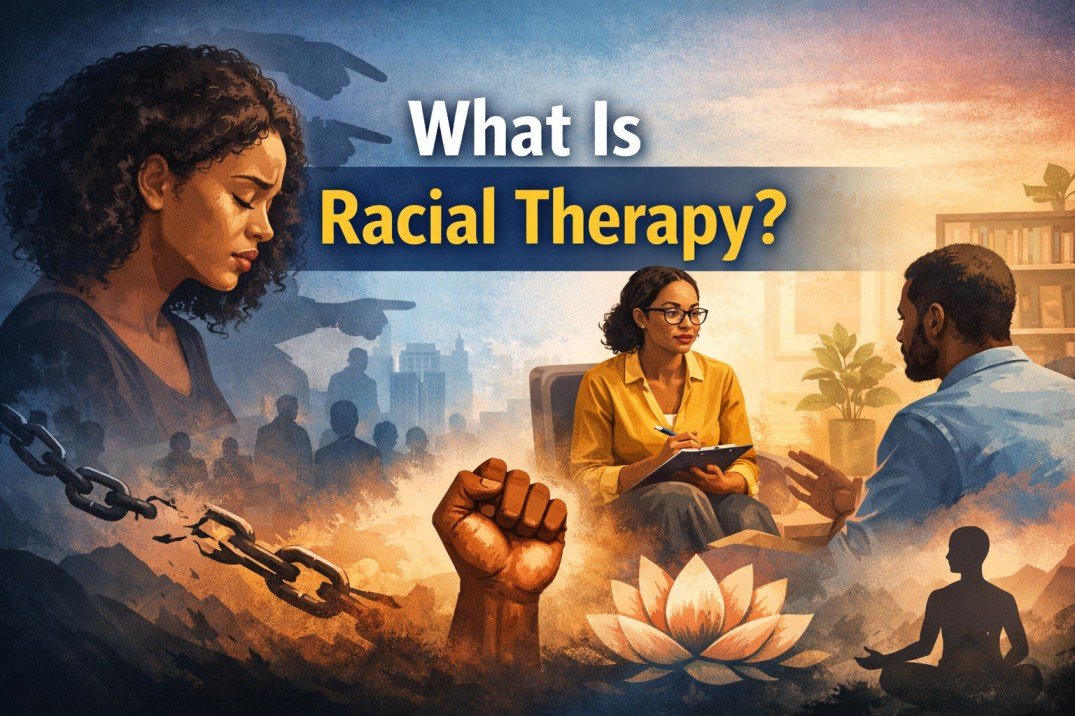
Racial therapy is a form of mental health therapy that helps you process the psychological effects of racism, discrimination, and race-related stress. It focuses on race-based traumatic experiences, cultural identity, and emotional responses shaped by bias. Racial therapy provides a culturally aware and validating environment where you can understand how racism affects your mental health and develop practical coping strategies.
Racial trauma refers to emotional injury caused by racism and discrimination. It often develops through repeated experiences rather than a single event. Microaggressions, stereotyping, exclusion, and exposure to racial injustice all contribute to racial trauma. These experiences accumulate and create chronic stress that affects emotional stability.
You may notice racial trauma when you constantly monitor how you speak or behave to avoid stereotypes. You may feel isolated in workplaces where representation is limited. Exposure to racial violence or discrimination can also create fear, anger, or emotional exhaustion. Over time, these reactions influence mood, confidence, and sense of safety.
Racial therapy helps you identify these patterns and process the emotional impact so stress does not continue to build.
Also Read: Sound Therapy for PTSD: Healing Through Vibrations
Racism creates ongoing psychological stress. When you repeatedly encounter bias, your body remains in a heightened alert state. This increases anxiety, irritability, and fatigue. Chronic stress also affects concentration, sleep, and emotional regulation.
You may feel pressure to code switch in professional settings. You may experience isolation when you are the only person of your background in a space. News about racial injustice can trigger distress. Some people internalize negative beliefs about their identity. These responses reflect the emotional toll of discrimination.
Racial therapy helps you understand these reactions and respond in healthier ways.
Also Read: How To Prevent Negative Thoughts With Cognitive Behavioural Therapy
Racial therapy helps you process emotional responses connected to discrimination and identity. It supports anxiety related to bias, anger linked to injustice, and exhaustion from navigating unequal environments. It also helps with identity confusion, cultural pressure, and intergenerational experiences.
Many people seek racial therapy when they feel misunderstood in traditional therapy. Others want help processing workplace discrimination or social exclusion. Racial therapy creates space for experiences that often remain unaddressed.
Also Read: Best Frequency for Brain Healing
You may benefit from racial therapy if race-related experiences affect your emotional well being. This includes direct discrimination, subtle bias, and cultural identity stress. People of color often seek this support, but anyone impacted by race-related experiences can benefit.
Racial therapy is also helpful if traditional therapy does not acknowledge your cultural experiences. This approach removes the need to explain why race matters. The therapist understands the connection between identity and mental health.
Also Read: Trauma-Informed Therapy: A Path to Healing
Racial therapy begins with discussing your experiences with race and identity. You describe events and emotional reactions. The therapist helps you identify patterns and understand stress responses shaped by discrimination.
The work focuses on processing emotions such as anger, fear, or sadness. You also learn coping strategies to manage stress. These strategies may include boundary setting, emotional regulation, and identity strengthening. Over time, you build resilience while acknowledging real challenges.
Racial therapy often combines established therapeutic approaches with cultural awareness. Cognitive behavioral therapy helps you identify harmful beliefs shaped by discrimination. Trauma-focused therapy helps process distressing race-related experiences.
Some therapists use EMDR to reduce emotional intensity connected to racial trauma. Narrative therapy supports identity exploration and meaning-making. Mindfulness techniques help regulate stress triggered by racial environments. These methods address both trauma and identity.
Racial therapy helps you process experiences that often remain unresolved. Many people experience reduced anxiety and improved emotional clarity. Identity confidence often increases as you separate your self worth from discriminatory experiences.
You also develop strategies for navigating biased environments. Emotional validation reduces stress and supports long term mental well being. Over time, racial therapy strengthens resilience and psychological stability.
Traditional therapy sometimes uses a neutral approach that does not focus on race. This can overlook how discrimination contributes to emotional distress. As a result, symptoms may be treated without addressing underlying stress.
Racial therapy directly examines race and identity. The therapist understands systemic bias and cultural experiences. This leads to more accurate understanding of your stress and more effective coping strategies.
You talk about experiences related to race, identity, and discrimination. The therapist listens, validates emotions, and helps you process reactions. You explore how these experiences influence thoughts and behavior.
Sessions also include coping strategies and identity exploration. Over time, you develop tools to manage stress and strengthen emotional stability.
Racial therapy considers how race interacts with other aspects of identity. Gender, culture, immigration background, and socioeconomic factors influence experiences with discrimination. These overlapping identities shape emotional responses.
For example, someone may experience both racial and gender bias in professional settings. Cultural expectations within family systems may also create pressure. Racial therapy examines these layers together to provide accurate support.
You may consider racial therapy when racism affects your mood, stress levels, or identity. Emotional exhaustion, anxiety, and anger are common indicators. Workplace discrimination, social exclusion, or cultural conflict may also prompt support.
Racial therapy also helps when you want clarity around identity or process intergenerational experiences. It supports both healing and personal growth.
Racial therapy is not limited to one group. Multiracial individuals, immigrants, and people navigating cultural identity often benefit. Interracial families may also seek this support. Anyone experiencing race-related stress can use this approach.
Look for therapists who specialize in racial trauma or culturally responsive therapy. Review their experience addressing discrimination and identity. You can ask how they incorporate race into treatment.
A qualified therapist acknowledges systemic factors and validates lived experiences. Feeling understood early in therapy is an important sign.
Racial therapy is used to address the emotional and psychological impact of racism, discrimination, and cultural identity stress. It helps you process race-based traumatic experiences and develop coping strategies for navigating race-related stress.
Racial therapy focuses specifically on how race and discrimination affect mental health. Traditional therapy may focus on symptoms without examining racial experiences. Racial therapy addresses the root causes linked to bias and identity.
Anyone affected by racism or race-related stress can benefit. People of color, multiracial individuals, immigrants, and those navigating cultural identity often seek this support.
Racial therapy helps reduce anxiety connected to discrimination, workplace bias, and social exclusion. It helps you understand triggers and develop strategies to manage stress.
You discuss experiences related to race, identity, and discrimination. The therapist helps you process emotions, understand patterns, and build coping strategies.
Racial therapy often uses evidence-based approaches such as cognitive behavioral therapy, trauma-focused therapy, and mindfulness techniques adapted to address race based stress.
Racial therapy helps you understand and process the psychological impact of racism, strengthen your identity, and develop practical coping strategies for navigating race-related stress. By addressing discrimination, cultural experiences, and emotional responses directly, this approach supports long-term mental well-being and resilience. If race-related experiences affect your emotional health, working with a therapist who understands these dynamics can provide clarity, validation, and effective support. PS IT’s Counseling offers culturally responsive therapy that acknowledges lived experiences and helps you build resilience while protecting your mental health.