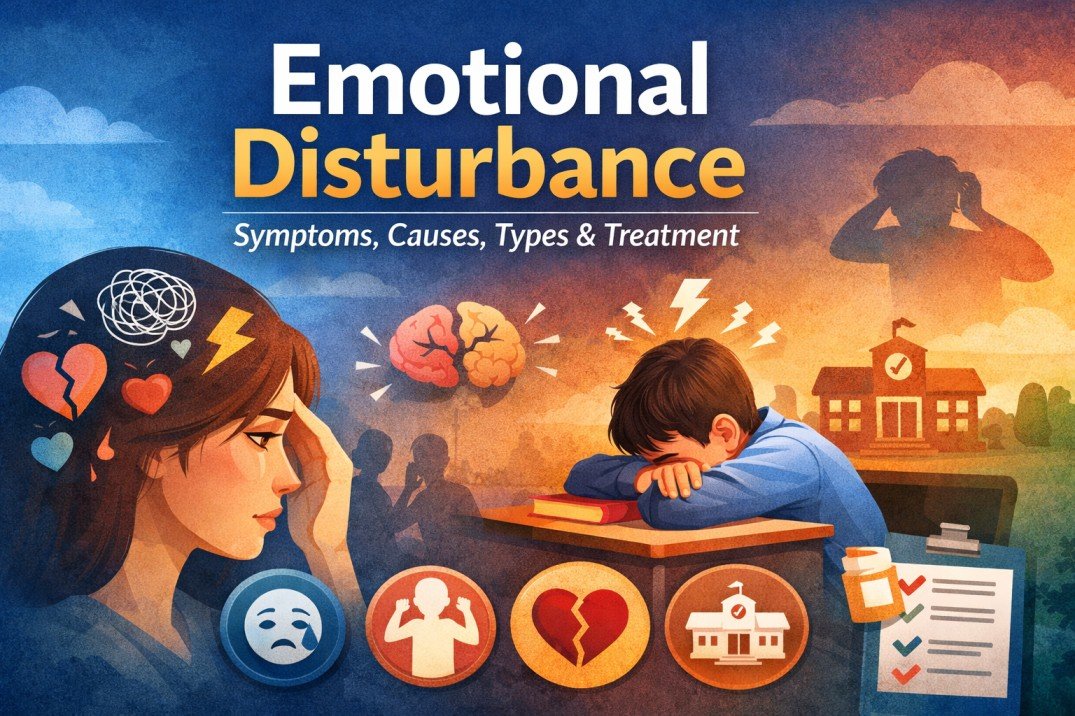
An emotional disturbance is a condition where you experience persistent emotional or behavioral difficulties, such as anxiety, mood swings, or difficulty maintaining relationships that interfere with your daily functioning. In children, it is also defined under educational guidelines as a condition that significantly affects learning, behavior, and school performance over time.
Emotional disturbance occurs when your emotional responses become difficult to regulate and start affecting your daily life. You may feel emotions more intensely, react more quickly, or struggle to return to a balanced state after stress.
From a mental health perspective, this reflects emotional dysregulation. Your brain’s ability to manage emotional signals becomes less stable. Instead of responding thoughtfully, you react automatically, which can lead to impulsive actions, conflict, or withdrawal.
In children, emotional disturbance has a formal meaning in educational settings. It refers to long-term emotional or behavioral patterns that negatively affect a child’s ability to learn. This includes difficulty forming relationships, inappropriate emotional responses in normal situations, and persistent feelings of sadness, anxiety, or fear that interfere with school performance.
The key difference between normal emotions and emotional disturbance is consistency and impact. Temporary emotional reactions are normal. Ongoing emotional instability that disrupts your functioning is not.
Also Read: Best Frequency for Brain Healing
Emotional disturbance affects multiple areas of your life. These symptoms are usually persistent and interfere with how you function.
These symptoms often overlap. When they persist and affect your daily functioning, they indicate a deeper issue.
Also Read: Best Healing Frequencies – A Complete Guide
Emotional disturbance develops through a combination of factors rather than a single cause.
Genetic factors can make you more sensitive to emotional stress. If mental health conditions run in your family, your emotional responses may be more reactive.
Brain function also plays a role. Differences in how your brain processes emotions and stress can affect how strongly and how long you react.
Environmental factors shape emotional patterns over time. Chronic stress, trauma, unstable family environments, or neglect can condition your emotional responses.
Psychological conditions such as anxiety, depression, or trauma-related disorders often contribute. In many cases, emotional disturbance reflects underlying mental health challenges.
Also Read: Sound Therapy for PTSD: Healing Through Vibrations
Emotional disturbance is an umbrella term that includes several conditions affecting emotional regulation.
Each of these involves difficulty managing emotions, though the patterns differ.
In children, emotional disturbance often appears in school environments. A child may struggle to focus, react strongly to situations, or withdraw from interaction.
Learning difficulties may occur even when intelligence is normal. Emotional instability interferes with attention and engagement.
Behavioral issues such as aggression or defiance are also common. These behaviors reflect emotional challenges rather than simple discipline problems.
When these patterns persist, schools may evaluate the child. If emotional disturbance significantly impacts learning, structured support and intervention may be provided.
You naturally experience a wide range of emotions. Emotional disturbance begins when those emotions become intense, frequent, and difficult to control.
Normal emotions respond to situations and gradually settle. Emotional disturbance persists beyond the situation and often feels disproportionate.
The difference lies in how long emotions last, how intense they are, and how much they affect your ability to function.
Emotional disturbance affects your daily functioning in clear ways.
At work or school, it reduces concentration and productivity. You may struggle to complete tasks or manage pressure.
In relationships, emotional instability leads to conflict, misunderstandings, or withdrawal.
Decision-making becomes reactive instead of thoughtful. You respond based on immediate emotions rather than long-term thinking.
Over time, this reduces confidence and creates a sense of losing control.
You should seek help when emotional patterns persist and interfere with your daily life.
If your emotions feel overwhelming most days, if your reactions affect relationships or responsibilities, or if you struggle to manage stress consistently, professional support is necessary.
Warning signs include ongoing instability, difficulty functioning, and thoughts of self-harm.
If these signs sound familiar, professional help can make a difference.
Treatment focuses on improving emotional regulation rather than suppressing emotions.
Therapy is the primary approach. It helps you understand emotional patterns and develop practical strategies to manage them.
Medication may be used when underlying conditions such as anxiety or depression contribute significantly.
Lifestyle changes such as proper sleep, regular activity, and stress management support emotional stability.
Therapy provides structured methods to improve emotional control.
Cognitive behavioral therapy helps you identify and change thought patterns that trigger emotional reactions.
Dialectical behavior therapy teaches skills to manage intense emotions and reduce impulsive behavior.
Acceptance and commitment therapy helps you stay present and reduce avoidance.
Trauma-informed therapy addresses past experiences that influence current emotional responses.
Mindfulness helps you recognize emotional changes early and respond calmly.
Therapy helps you understand and regulate emotions effectively.
Therapy begins with identifying your emotional triggers and patterns.
You learn skills to manage emotional responses, including awareness, regulation, and controlled reactions.
Over time, you apply these skills in real situations. Progress shows in better control, reduced reactivity, and improved stability.
As emotional regulation improves, you gain better control over your responses.
Stress becomes manageable. Relationships improve because your reactions become more stable.
You build confidence in handling situations without feeling overwhelmed.
It is difficulty managing emotions in a way that affects your daily life.
It can be part of a mental health condition or a pattern of emotional dysregulation.
It often results from genetic, neurological, and environmental factors.
Yes. Therapy and support can significantly improve emotional regulation.
A professional evaluates patterns, duration, and impact on functioning.
Serious Emotional Disturbance refers to more severe conditions that significantly impair functioning, especially in children.
Emotional disturbance reflects ongoing difficulty in managing emotions that affects how you function in daily life. It goes beyond temporary stress and requires attention when it becomes persistent.
You can improve emotional regulation with the right support. Professional therapy helps you understand your emotional patterns, build control, and create stability. You do not have to manage overwhelming emotions alone.
At PS IT’s Counseling, you receive compassionate, evidence-based support focused on helping you regulate emotions, rebuild confidence, and regain a sense of balance in your life.