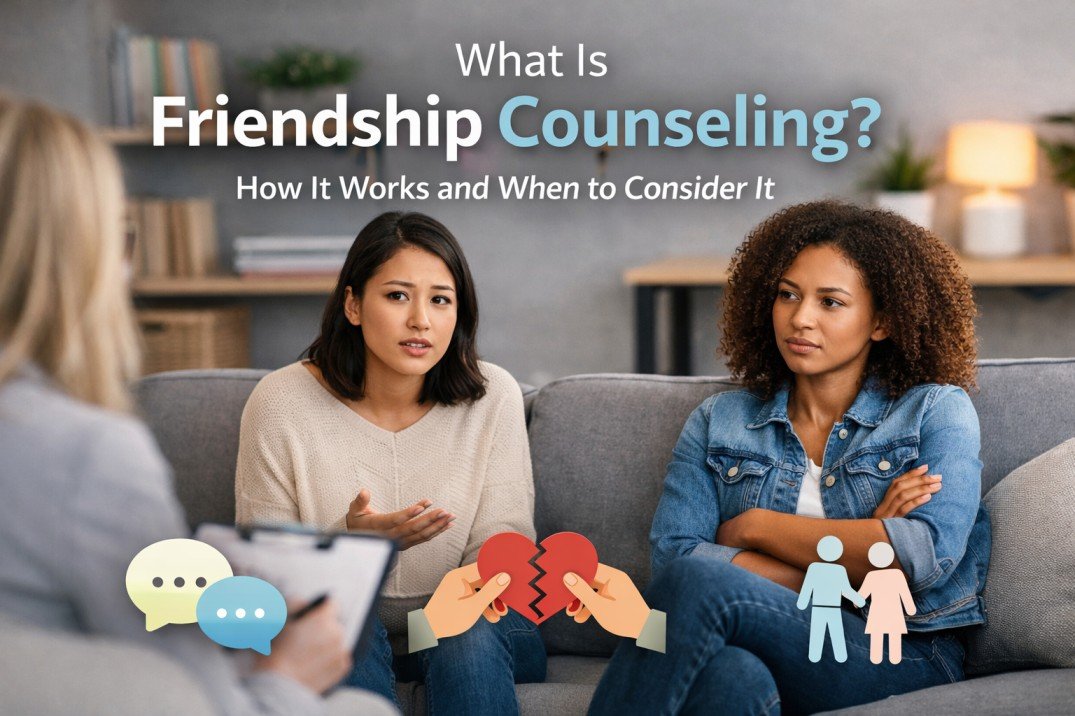
Friendship counseling is a therapist-guided process where you and your friend work through conflict, communication problems, or emotional distance in a structured and neutral setting. A licensed therapist helps both of you understand patterns, express concerns clearly, and decide whether to repair, strengthen, or redefine the friendship.
Friendship counseling falls under relationship counseling or interpersonal therapy. Licensed professionals such as LPCs, LCSWs, and psychologists typically provide it. Sessions focus on communication, trust, emotional triggers, and recurring conflict patterns.
Friendship counseling involves guided conversations. The therapist listens to both sides and identifies where communication breaks down. You discuss expectations, boundaries, and emotional reactions. The therapist then helps you reframe misunderstandings and practice healthier interaction.
Most sessions follow a practical structure. First, the therapist gathers background about the friendship and current issue. Then they identify patterns such as avoidance, criticism, or unmet expectations. After that, you practice communication skills during the session. Finally, you leave with specific steps to try in real life.
Some friends attend together. In other cases, one person starts individually. Both approaches work. The goal remains the same. Improve understanding and reduce conflict.
Therapists often use Cognitive Behavioral Therapy and Interpersonal Therapy. These approaches help you recognize thinking patterns, emotional triggers, and behavioral responses that affect your friendship.
Also Read: Best Healing Frequencies – A Complete Guide
People seek friendship counseling when a relationship starts to feel strained or confusing. Many friendships change over time. Misunderstandings build quietly. Communication becomes indirect. Resentment grows. Counseling helps address these issues before the friendship breaks down completely.
Common reasons include ongoing misunderstandings, trust issues, emotional distance, jealousy, or feeling taken for granted. Major life changes also create friction. Moving to a new city, getting married, changing jobs, or having children shifts expectations. One friend may want more connection while the other has less availability. Counseling helps both of you adjust without damaging the relationship.
Some people also seek friendship counseling when they feel unsure whether to continue the friendship. Therapy provides clarity. You may rebuild the bond or decide to create healthier distance.
Also Read: Best Frequency for Brain Healing
Friendship counseling focuses on interaction patterns rather than assigning blame. The therapist looks at how both people communicate, respond to stress, and handle conflict. You learn how your behavior affects the other person and how their behavior affects you.
You practice expressing concerns directly instead of hinting or withdrawing. You learn to listen without interrupting or defending immediately. The therapist may guide you through structured conversations. These conversations help each person feel heard.
Over time, sessions focus on problem-solving. You define expectations. You set boundaries. You decide how often to communicate. You clarify what support looks like. These decisions reduce confusion and prevent repeated arguments.
Sessions may be in person or virtual. Frequency depends on the situation. Some friendships improve in a few sessions. Others need longer support if trust has been damaged.
Also Read: Sound Therapy for PTSD: Healing Through Vibrations
Friendship counseling improves communication first. You stop guessing what the other person means. You start speaking directly and respectfully. This reduces misunderstandings.
Counseling also rebuilds trust. When conflict has damaged the relationship, structured conversations allow both of you to explain what happened and what you need going forward.
Another benefit is emotional clarity. Many people feel frustrated but cannot explain why. Therapy helps identify specific issues instead of vague tension.
Friendship counseling also strengthens boundaries. You learn how to say no without guilt. You understand each other’s limits. This prevents resentment.
Finally, counseling helps you decide the future of the friendship. Some friendships grow stronger. Others shift into a healthier, less intense connection. Either outcome supports emotional well-being.
Also Read: Trauma-Informed Therapy: A Path to Healing
Friendship counseling helps close friends dealing with conflict. It also helps long term friendships that have grown distant. Adult friendships often change due to career demands, family responsibilities, or relocation. Counseling helps navigate these transitions.
It also benefits friendships affected by betrayal, broken trust, or repeated arguments. In some cases, one friend feels ignored while the other feels overwhelmed. Therapy helps clarify expectations and reduce assumptions.
People who struggle to maintain friendships may also benefit. Counseling can identify communication habits, emotional reactions, or social anxiety that affect relationships.
You may benefit from friendship counseling if:
Friendship counseling and couples counseling use similar techniques but focus on different relationship dynamics. Couples counseling addresses romantic relationships and shared life responsibilities. Friendship counseling focuses on emotional support, boundaries, and communication without romantic expectations.
Friendship counseling usually has fewer practical obligations. Friends do not share finances, parenting, or housing. The work centers on respect, communication, and emotional balance. This often makes the process more flexible.
Friendship counseling can repair a strained friendship when both people are willing to participate honestly. The therapist helps identify what caused the conflict and what each person needs moving forward. If trust can be rebuilt, the friendship often becomes stronger.
However, counseling does not force reconciliation. Sometimes therapy reveals that expectations no longer align. In that case, counseling helps you end or redefine the friendship respectfully instead of ending with resentment.
You may benefit from friendship counseling if conversations frequently turn into arguments, if you avoid each other, or if you feel misunderstood. You may also notice emotional distance, unresolved tension, or repeated conflicts about the same issue.
If you feel unsure about continuing the friendship, counseling can provide clarity. If the relationship causes stress instead of support, structured guidance can help.
Friendship counseling is typically offered under relationship counseling or interpersonal therapy services. Licensed therapists provide these sessions in private practices, mental health clinics, and online therapy platforms. Sessions may be conducted in person or virtually depending on availability and preference.
Therapists follow professional guidelines for confidentiality, ethical practice, and client care. The process remains structured and neutral so both individuals feel heard.
Friendship counseling is a structured therapy process where friends work with a licensed therapist to resolve conflict, improve communication, and strengthen their relationship.
Yes. Friends can attend therapy together. A therapist guides conversation, helps both people share perspectives, and supports healthier communication.
Friendship counseling works when both individuals participate honestly. It improves communication, rebuilds trust, and clarifies expectations within the relationship.
Friends should consider counseling when communication breaks down, conflicts repeat, emotional distance grows, or trust has been damaged.
Yes. Friendship counseling focuses on friend relationships, boundaries, and communication. Couples therapy focuses on romantic partnerships and shared life responsibilities.
Yes. One person can begin individually. The therapist helps explore patterns and may invite the other friend later if appropriate.
Some friendships improve within a few sessions. Others require longer support depending on the level of conflict and trust rebuilding needed.
Friendship counseling helps you address conflict, improve communication, and strengthen meaningful relationships. A therapist guides structured conversations that clarify expectations, rebuild trust, and reduce misunderstandings. This process helps you repair the friendship or redefine it in a healthy way. PS IT’s Counseling provides professional support designed to help friends build clearer communication, stronger boundaries, and more balanced relationships.